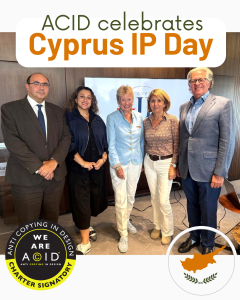

2019 theme – Reach for Gold : IP and Sports
World IP Day offers a unique opportunity to join with others around the globe to consider how intellectual property (IP) helps the global arts scene to flourish and how it enables the technological innovation that drives human progress – find out more here.
In 2000, WIPO’s member states designated April 26 – the day on which the WIPO Convention came into force in 1970 – as World IP Day with the aim of increasing general understanding of IP.
This year’s theme: Reach for Gold: IP and Sports celebrates the ingenuity, creativity, drive and performances of athletes, and all those working behind the scenes in the world of sports – researchers, engineers, brands, and the media – to bring people and cultures together by ensuring that everyone can take part in and enjoy sports where they live and can share in the excitement of competitive sporting action.
Dids Macdonald, OBE, ACID’s CEO said, Each year, nationally, every country in the world can celebrate World IP Day which is a unique opportunity to highlight the role that IP rights (patents, trademarks, industrial designs, copyright) play in encouraging innovation and creativity. Our ACID focus is to ensure that there is a balanced IP system that not only recognises and rewards inventors and creators for their work but strives to ensure that IP protection is paramount. Above all it is necessary to ensure that that society rewards creators whilst benefiting from their creativity and ingenuity.”
IP rights provide the means by which researchers, inventors, businesses, designers, artists and others can legally protect their innovative and creative outputs and secure an economic return from them. But the IP system is no free lunch. Only when a work meets certain established criteria will it qualify for IP protection. A song, or a movie, for example, only qualifies for copyright protection if they are original. Similarly, a technology has to be novel, non-obvious and useful if it is to qualify for a patent. Moreover, to obtain a patent, an inventor is obliged to make details of her invention public so that others can build on the technology.
An effective IP system that balances the interests of inventors and creators with those of society as a whole has proven an effective way to encourage inventors and creators to invest their time, energy and ingenuity into developing new technologies and new forms of creative expression that both improve and enrich our lives.
An environment in which innovation and creativity thrive and which is diverse and inclusive, improves our chances of addressing the major challenges facing humanity, driving human progress, and making our lives healthier, safer, and more comfortable.
Spread the Word
Latest News
Newsletter Sign-Up
| Cookie | Duration | Description |
|---|---|---|
| cookielawinfo-checkbox-analytics | 11 months | This cookie is set by GDPR Cookie Consent plugin. The cookie is used to store the user consent for the cookies in the category "Analytics". |
| cookielawinfo-checkbox-functional | 11 months | The cookie is set by GDPR cookie consent to record the user consent for the cookies in the category "Functional". |
| cookielawinfo-checkbox-necessary | 11 months | This cookie is set by GDPR Cookie Consent plugin. The cookies is used to store the user consent for the cookies in the category "Necessary". |
| cookielawinfo-checkbox-others | 11 months | This cookie is set by GDPR Cookie Consent plugin. The cookie is used to store the user consent for the cookies in the category "Other. |
| cookielawinfo-checkbox-performance | 11 months | This cookie is set by GDPR Cookie Consent plugin. The cookie is used to store the user consent for the cookies in the category "Performance". |
| viewed_cookie_policy | 11 months | The cookie is set by the GDPR Cookie Consent plugin and is used to store whether or not user has consented to the use of cookies. It does not store any personal data. |