
Following the recent government announcement on copyright and AI, Anti Copying in Design (ACID) was involved in an emergency summit recently, organised in an amazingly short time by former journalist and campaigner extraordinaire Graham Lovelace, creator of ‘Charting Gen AI’ in association with the Creators’ Rights Association. It marked a powerful and timely moment for the UK’s creative sector. Bringing together voices from across disciplines, the event highlighted not only the economic importance of creative work, but also its cultural and societal value, something so often overlooked in policy discussions.
Opening the conference was a compelling call to action from Baroness Beeban Kidron. She spoke passionately about the growing threat of global theft within the creative industries, particularly in the age of AI and digital distribution. Her message was unambiguous: without stronger protections and international cooperation, creators risk losing control over their work at an unprecedented scale. This warning resonated strongly with attendees and helped anchor the conference in real-world urgency. She talked of IP theft and a “government presiding over one of the greatest acts of theft if modern history; the stripping of the UK’s creative industries of their rights, livelihoods, and control over their work.”
One of the strongest positives of the conference was its emphasis on unity. Creating a collective voice was a strong theme running through the entire day. Representatives from music, film, publishing, and digital media stood shoulder to shoulder alongside designers, illustrators, and visual artists, reinforcing a shared message: creative rights must be protected in an increasingly complex digital landscape. A united voice is a stronger voice, and this cross-sector collaboration gave the event a sense of momentum and urgency, showing that the challenges faced are not isolated but deeply interconnected.
Dids Macdonald, Anti Copying in Design (ACID) Chair and Co-founder, who attended the conference said, “A particularly important fact that emerged was that design, too, must have a voice. While industries such as music and film often dominate conversations around intellectual property, designers are equally vulnerable to misuse, under-compensation, and uncredited replication of their work. Hopefully, design’s voice will be heard, because it is important that it is elevated as a core creative discipline, emphasising that innovation in branding, product design, and digital experiences is fundamental to the broader economy. Recognising designers as rights holders, not just service providers, must remain in the AI dialogue.”
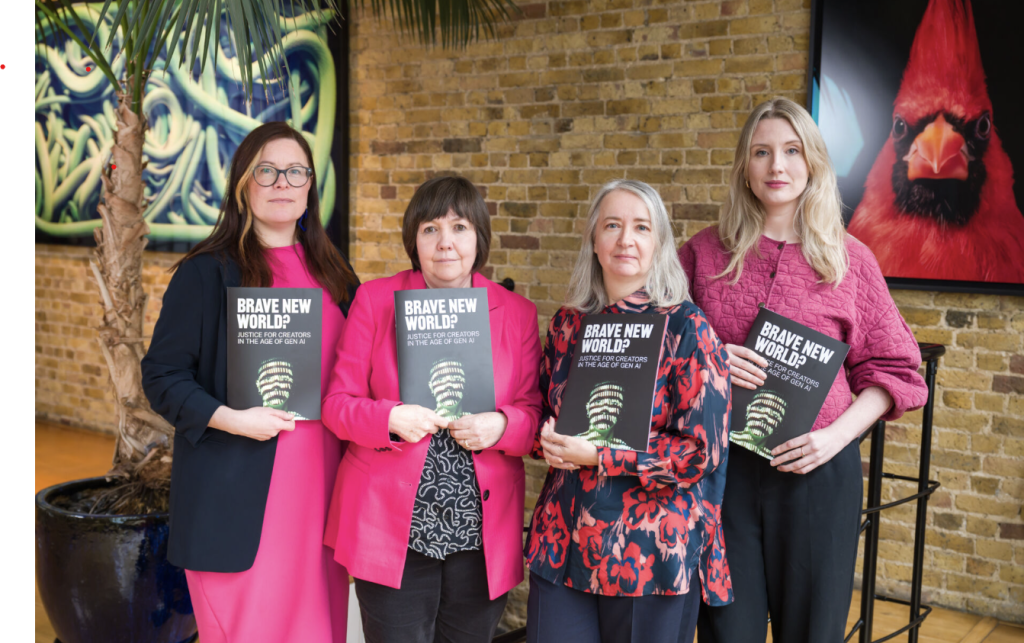
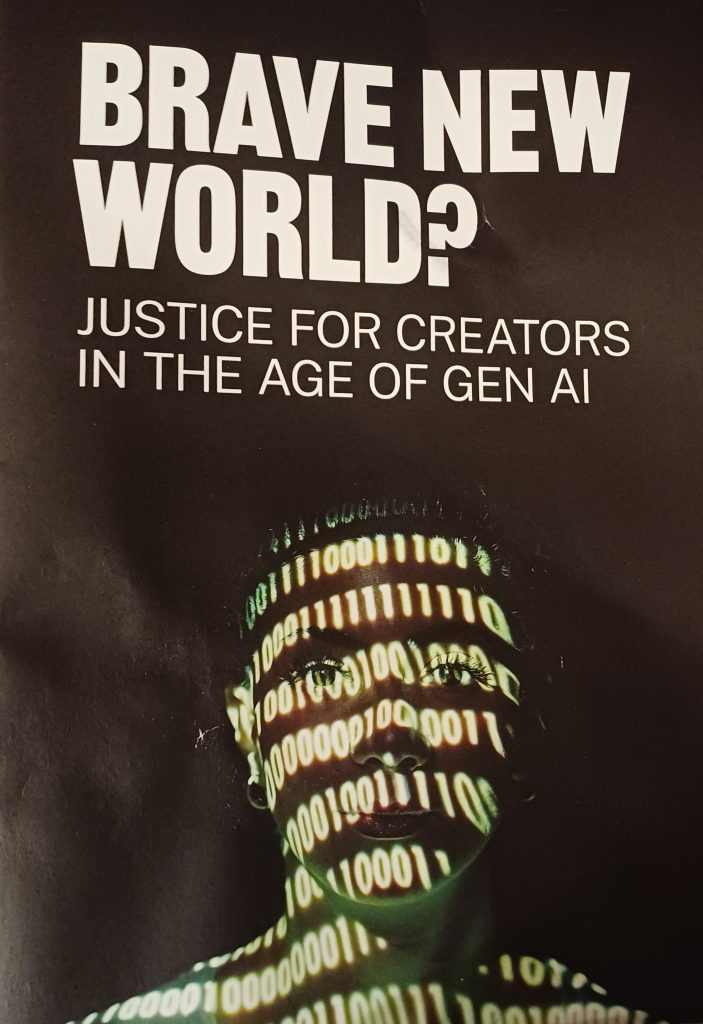
A publication, ‘BRAVE NEW WORLD’ Justice for Creators in the Age of Gen AI was distributed at the summit. This is a powerful new publication by the Creators’ Rights Association whose members are crystal CLEAR that there must be a framework for AI:A fair future for creators.ACID is fully supportive of the principles:
C – Content first,
L – Licensing, not scraping
E – Ethical use of training data
A – Accountability and transparency
R – Remuneration and rights.
Equally positive was the solution-led tone of the discussions. Rather than focusing solely on challenges, speakers explored solutions, ranging from improved licensing frameworks to better education around creators’ rights. There was a shared sense that change is not only necessary but achievable with coordinated effort.
Ultimately, the conference succeeded in amplifying a vital message: creativity is not expendable, and those who produce it deserve recognition, protection, and fair compensation. By ensuring that design is included in this conversation and by echoing Baroness Kidron’s urgent call to action, the event set a solid foundation for future advocacy and reform.
Spread the Word
Latest News
Newsletter Sign-Up
| Cookie | Duration | Description |
|---|---|---|
| cookielawinfo-checkbox-analytics | 11 months | This cookie is set by GDPR Cookie Consent plugin. The cookie is used to store the user consent for the cookies in the category "Analytics". |
| cookielawinfo-checkbox-functional | 11 months | The cookie is set by GDPR cookie consent to record the user consent for the cookies in the category "Functional". |
| cookielawinfo-checkbox-necessary | 11 months | This cookie is set by GDPR Cookie Consent plugin. The cookies is used to store the user consent for the cookies in the category "Necessary". |
| cookielawinfo-checkbox-others | 11 months | This cookie is set by GDPR Cookie Consent plugin. The cookie is used to store the user consent for the cookies in the category "Other. |
| cookielawinfo-checkbox-performance | 11 months | This cookie is set by GDPR Cookie Consent plugin. The cookie is used to store the user consent for the cookies in the category "Performance". |
| viewed_cookie_policy | 11 months | The cookie is set by the GDPR Cookie Consent plugin and is used to store whether or not user has consented to the use of cookies. It does not store any personal data. |