
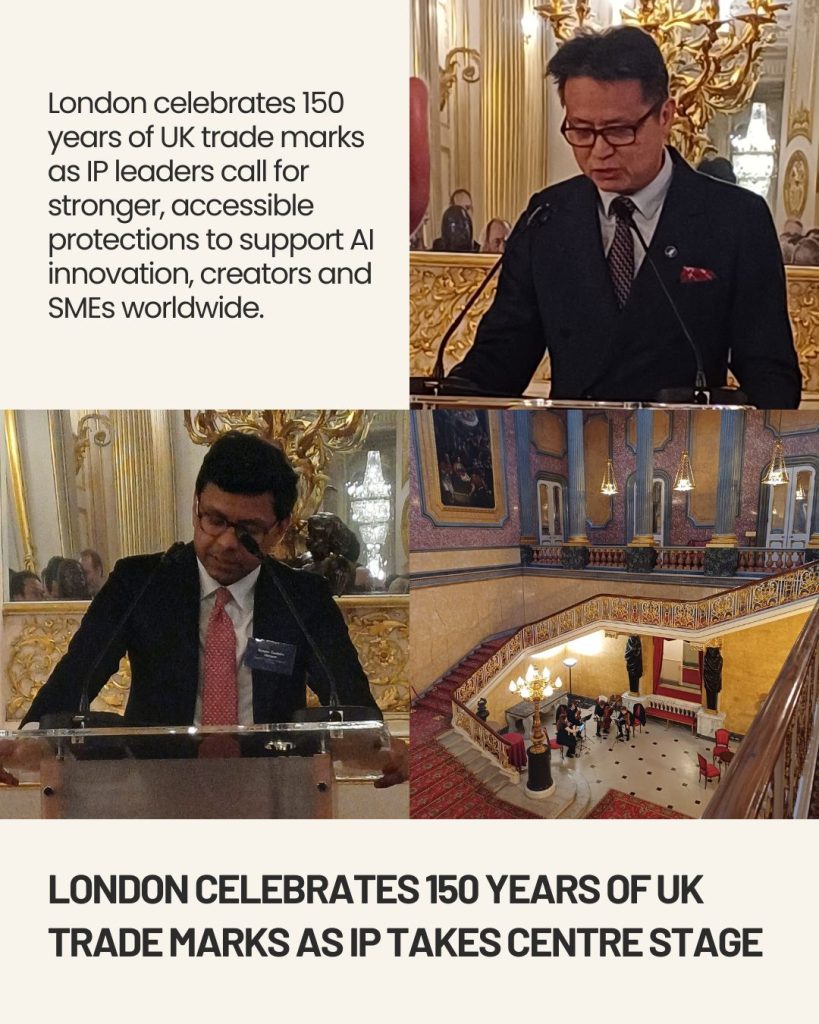
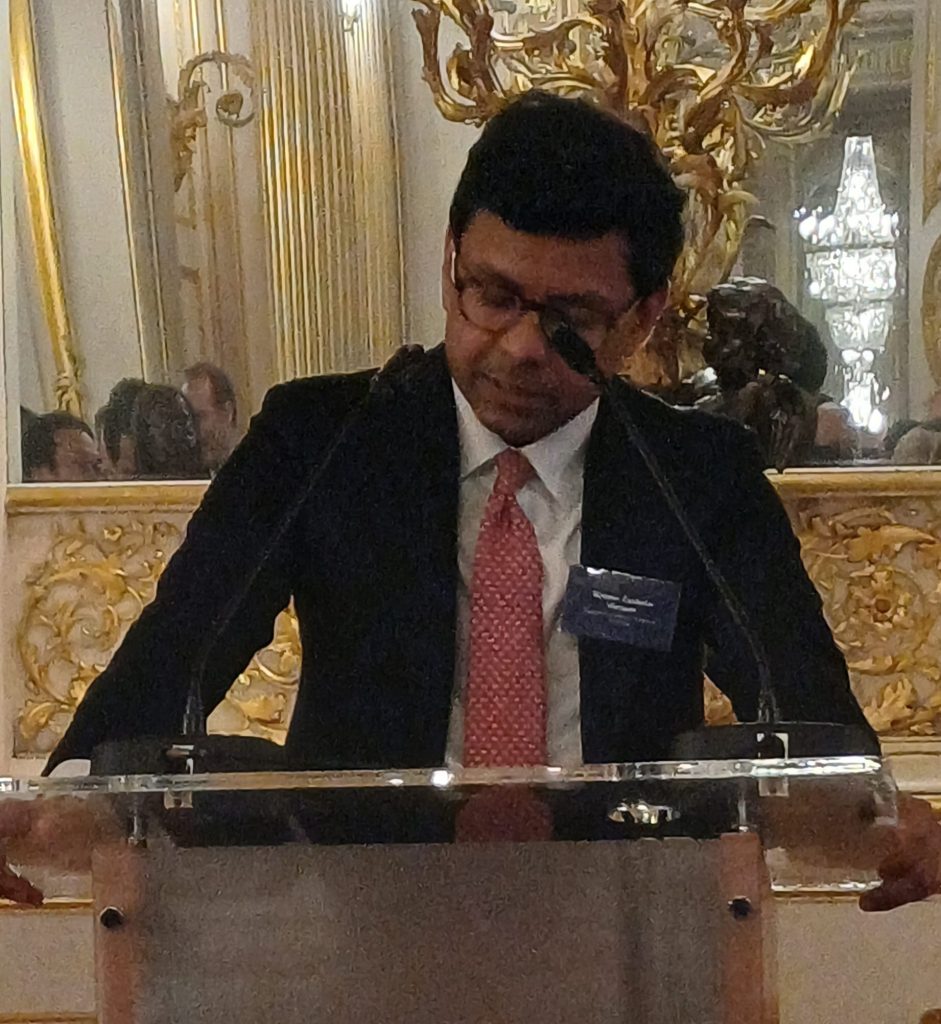
At a glittering reception at London’s Lancaster House earlier this week, the IP Minister the Rt Hon Kanishka Narayan, MP., confirmed to an audience of international intellectual property (IP) legal professionals, policy makers, judges, industry and academia that the UK government is positioning IP as a strategic economic tool, with a focus on AI, enforcement and financing to unlock growth. In an earlier speech, the Minister, as he opened the 148th International Trade Marks Association annual conference hosting 10,000 delegates, said, “Few cities have done more to shape global thinking on law and innovation,” he said, describing London as “a meeting point for law and commerce”.
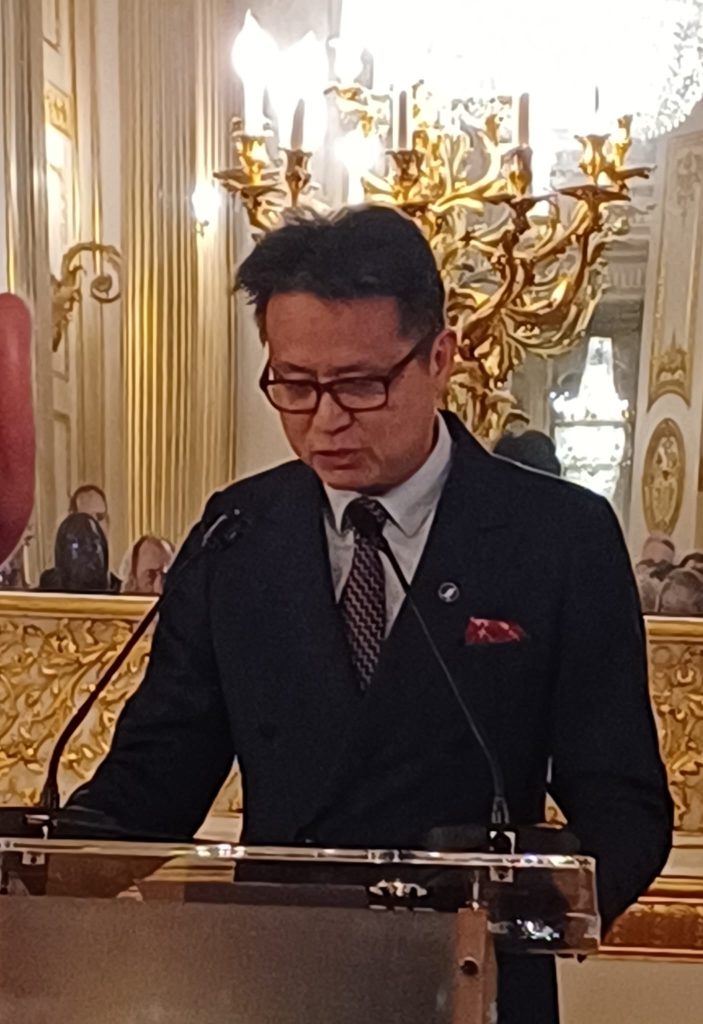
Daren Tang, Director General of the World Intellectual Property Organisation (WIPO), challenged the audience to think beyond the professional IP community, asking if IP can be made more, “Relevant and helpful to people out there who need protection for their innovations, ideas, and brands”. Tang continued to expand on this by sayingthat “IP is not just about the law and regulations” but a “catalyst for jobs, investments, growth, and prosperity”. He emphasised the importance of global partnership and cited that the WIPO’s global brand database included over 3 million UK registered trade marks, calling it a significant step for technical collaboration and the use of machine learning.
Dids Macdonald OBE., Chair and Co-founder of Anti Copying In Design, who attended the reception said, “I welcomed the opportunity to speak briefly with Minister Narayan in the context of the forthcoming recommendations arising from the Designs Consultation. I took the occasion to highlight the continuing disparity between designers whose interests are strongly safeguarded through copyright protections, and designers who rely upon unregistered design rights, where effective deterrence and access to timely, affordable enforcement remain significantly more limited.
While the United Kingdom is rightly recognised for the strength and sophistication of its IP framework from both a legal, technical and procedural perspective, it is essential that we do not overlook the question of accessibility and practical relevance for those who most depend upon these protections, particularly SMEs and emerging innovators in the UK and internationally. A truly effective IP regime must ensure that innovation, creativity, and enterprise are not only encouraged, but are also capable of being protected, sustained, and commercialised in practice.
Reflecting on the Minister’s observation that IP is central to economic growth, Macdonald commented further, “Careful and balanced consideration will be required to ensure growth through AI does not erode, eclipse or lessen the rights and interests of IP creators whose protection through transparency, attribution and recompense is pivotal to this ambitious UK objective”.
The event was sponsored by the Chartered Institute of Patents (CIPA) and the Chartered Institute of Trade Mark Attorneys (CIPA) and the Intellectual Property Office (IPO).
About INTA
The 2026 Annual Meeting of the (INTA), held this week at ExCeL London, brought together more than 10,000 intellectual property professionals, policymakers, brand owners, and legal practitioners from over one hundred jurisdictions to discuss the evolving global IP landscape. Central themes included the impact of artificial intelligence on trademarks, copyright, enforcement, and brand protection, alongside broader discussions on innovation, digital transformation, and international cooperation in intellectual property policy. Senior representatives from national IP offices, the (WIPO), and leading multinational companies participated in high-level sessions examining the role of intellectual property in driving economic growth and safeguarding innovation.
The conference also emphasised the importance of balanced regulatory frameworks capable of supporting technological advancement while protecting creators, businesses, and SMEs in an increasingly AI-driven and digitally interconnected marketplace. (inta.org)
This year marks the 150th anniversary of the United Kingdom’s first registered trade mark a milestone that highlights the UK’s longstanding leadership in intellectual property protection and commercial innovation. Since the introduction of the Trade Marks Registration Act in 1875, trade marks have played a vital role in safeguarding brand identity, consumer trust, and economic growth. The anniversary serves as an important reminder of the enduring value of intellectual property in supporting businesses, encouraging entrepreneurship, and enabling British creativity and innovation to flourish globally.
Bass’s famous Red Triangle label is widely recognised as the first registered trade mark in the United Kingdom. It became UK Trade Mark No. 1 on 1 January 1876, the first day registrations opened under the Trade Marks Registration Act 1875. According to popular history, a Bass employee queued overnight outside the registration office to secure the first filing. (GOV.UK)
More precisely, it was the first officially registered UK trade mark under the modern registration system, rather than the first mark ever used in commerce. Merchants and craftsmen had used identifying symbols for centuries before formal registration laws existed. (Reddit)
To support stronger IP for everyone, you can sign the ACID IP Charter.

Spread the Word
Latest News
Newsletter Sign-Up
| Cookie | Duration | Description |
|---|---|---|
| cookielawinfo-checkbox-analytics | 11 months | This cookie is set by GDPR Cookie Consent plugin. The cookie is used to store the user consent for the cookies in the category "Analytics". |
| cookielawinfo-checkbox-functional | 11 months | The cookie is set by GDPR cookie consent to record the user consent for the cookies in the category "Functional". |
| cookielawinfo-checkbox-necessary | 11 months | This cookie is set by GDPR Cookie Consent plugin. The cookies is used to store the user consent for the cookies in the category "Necessary". |
| cookielawinfo-checkbox-others | 11 months | This cookie is set by GDPR Cookie Consent plugin. The cookie is used to store the user consent for the cookies in the category "Other. |
| cookielawinfo-checkbox-performance | 11 months | This cookie is set by GDPR Cookie Consent plugin. The cookie is used to store the user consent for the cookies in the category "Performance". |
| viewed_cookie_policy | 11 months | The cookie is set by the GDPR Cookie Consent plugin and is used to store whether or not user has consented to the use of cookies. It does not store any personal data. |