
 ANOTHER CAMPAIGNING SUCCESS FOR ACID
Today the repeal of section 52 of the Copyright, Designs and Patents Act 1988 extends the copyright for a deceased designer’s work from 25 years to 70 years. This means that retailers and so called replica design companies will no longer be able to sell unauthorised replicas of iconic designs or works of artistic craftsmanship.
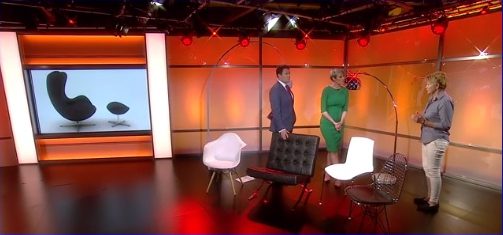
Speaking on BBC Breakfast TV this morning Dids Macdonald, OBE., CEO of Anti Copying in Design said:
“I think the most important point here is that we as consumers demand clarity and truth so that we can make informed purchasing decisions. Popular designs are not the same as iconic designs and selling iconic replicas, often made in China, is really only a sanitised word for Fakes. Retailers owe it is us to demonstrate ethics, compliance and respect for intellectual property and this is a prime example of consumer confusion. Often the replica or fake products are sub-standard. This was evidenced in 2011 when Elle decoration had five original designs by authorised licensors beside 5 Fakes or replicas and cut the fakes in half. The quality was not only sub-standard but in some cases did not comply with safety standards, in most it was shoddy compared to the licensed models.
So called replica companies/retailers are selling unauthorised and unlicensed copies of originals and from today this will now be against the law. Fakes are never in fashion and there are thousands of British designers producing original work. I know what I would rather have, given the choice of a fake or an original.”
From today iconic, artistic or works of artistic craftsmanship created before 1988 will be protected for 70 years after the death of designers. Designs created after June 1988 are protected by design law. Registered designs last for 25 years and unregistered design right lasts for a maximum of 15 years.
What it means is that the ‘knock-offs’ of some quite famous designs, like the Eames chair, the Arco floor lamp or the original Egg chair are no longer legal.
An overriding strategy of the UK Government is to support the creative industries and to harmonise the law across Europe. Leaving a loophole where unauthorised and unlicensed copies of iconic designs meant that the UK was a trading post for the rest of Europe to buy these products. And so we welcome this move, albeit apart from Estonia and Romania we were one of the last 3 countries to comply with EU law! The deliberate and intentional copying of designs smacks in the face of costly research, development and creative talent and there is nothing smart about it.
“Replica” designs have been hugely popular over recent years, but as of today no new copies may be made or imported and the public will find themselves having to pay the price for original designs.
All other design-led EU countries proactively support the notion of original design. Copying or selling copies is against the law and the Government’s stance is crystal clear reinforced by our own IP Minister, Baroness Neville-Rolfe only a couple of weeks ago, “IP enforcement in all its forms is a clear priority to support our creative industries”. It is even more important pre BREXIT to support our British designers and British made products and get away from the culture that it is OK to steal and free-ride on another’s creativity.
It also means that retailers who have benefitted significantly from replica designs like these over the years will have to take them off their shelves or be found liable if they haven’t complied by the end of the transition period which ends on 28 January 2017.
This is a huge opportunity for retailers to give consumers real choice of original designs and champion our creative industries and support the culture that it is wrong to sell copies. Retailers and replica companies have had a long time to get their acts together. When high profile proceedings were brought by Flos to protect their Arco light against Cameraro Casa e Famiglia and the Fluida look alike in 2006, this was a test case. It was finally decided in 2011 by the European Court of Justice. So awareness since 2006, a Court judgment in 2011 and now 3 consultations have given them plenty of time to change their business model from selling unauthorised and unlicensed fakes to selling original designs.
This law wasn’t meant to come into force until 2020 but this was expedited when the Government decided that the time period was excessive. Dids, continued:
“You cannot have an overall Government strategy which supports the creative industries and the intellectual property that underpins it on one hand and leave another area above the law with a further five years of unauthorised sales activity. It doesn’t make sense. Design punches above its weight at £74 billion to the UK economy. We are actually very good at it so it is right that the Government makes decisions which will not only support this, but allows innovation to foster growth. A good decision – with design currently growing at nearly 10% per year.”
Spread the Word
Latest News
Newsletter Sign-Up
| Cookie | Duration | Description |
|---|---|---|
| cookielawinfo-checkbox-analytics | 11 months | This cookie is set by GDPR Cookie Consent plugin. The cookie is used to store the user consent for the cookies in the category "Analytics". |
| cookielawinfo-checkbox-functional | 11 months | The cookie is set by GDPR cookie consent to record the user consent for the cookies in the category "Functional". |
| cookielawinfo-checkbox-necessary | 11 months | This cookie is set by GDPR Cookie Consent plugin. The cookies is used to store the user consent for the cookies in the category "Necessary". |
| cookielawinfo-checkbox-others | 11 months | This cookie is set by GDPR Cookie Consent plugin. The cookie is used to store the user consent for the cookies in the category "Other. |
| cookielawinfo-checkbox-performance | 11 months | This cookie is set by GDPR Cookie Consent plugin. The cookie is used to store the user consent for the cookies in the category "Performance". |
| viewed_cookie_policy | 11 months | The cookie is set by the GDPR Cookie Consent plugin and is used to store whether or not user has consented to the use of cookies. It does not store any personal data. |